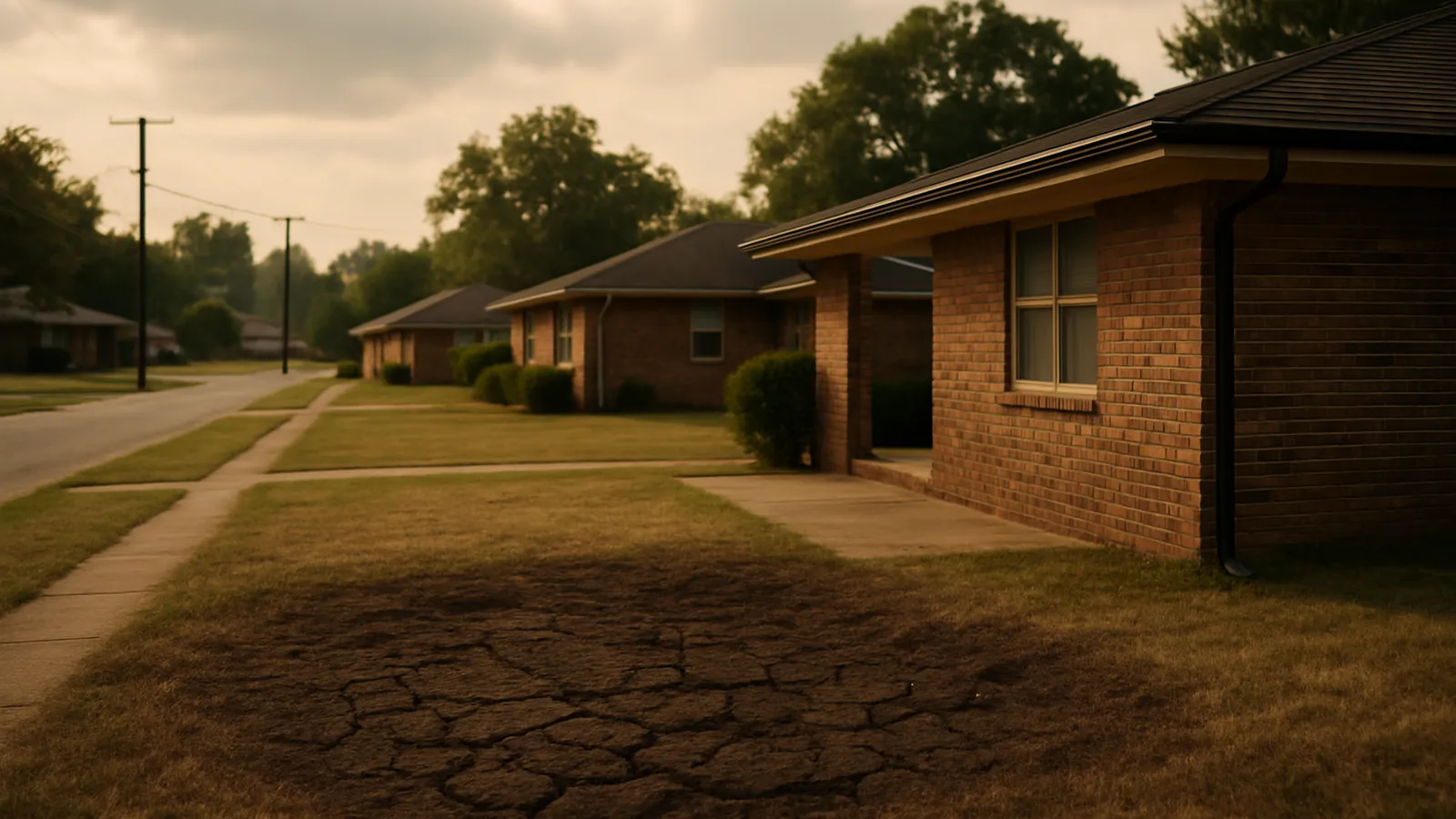
Concrete leveling in Tyler runs $500–$2,500 for most driveways, patios, walks, and porch slabs. Expanding polyurethane is injected through small ports to fill the void left by shrinking Wilcox clay and lift the slab back to grade — hours of work, usable the same day.
How the lift works, why flatwork sinks here first, and where the line is between leveling and piering.
Why flatwork goes first
A driveway has no piers, no footings, and none of the weight distribution a house has. When East Texas clay shrinks in a drought and leaves a void, a slab of flatwork simply follows it down. That makes your driveway an early-warning system for what the soil is doing: an approach that dropped an inch this summer is telling you the clay under the whole property moved. It is also why we ask about the house while we are there — sometimes the answer is nothing, and sometimes the flatwork was the first symptom.
How the lift actually works
| Step | What happens | Time |
|---|---|---|
| Port drilling | Penny-sized holes through the slab at mapped points | Under an hour |
| Polyurethane injection | Foam expands, fills the void, then lifts the slab | Watched in real time |
| Elevation control | Lift stopped at grade, checked as it goes | Continuous |
| Port patching | Holes filled and finished | Minutes |
| Return to service | Drive on it the same day | Immediate |
Where leveling ends and foundation repair begins
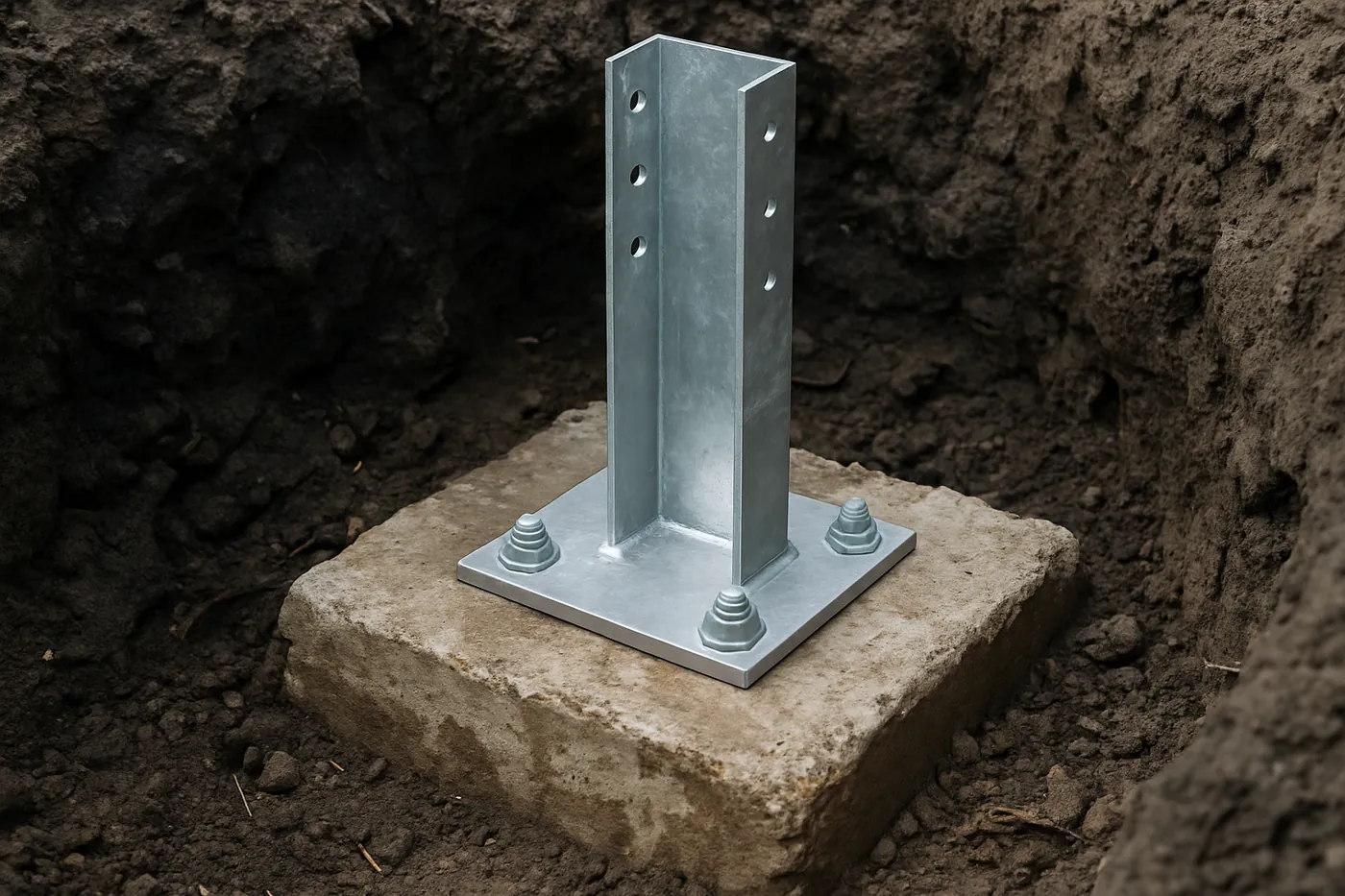
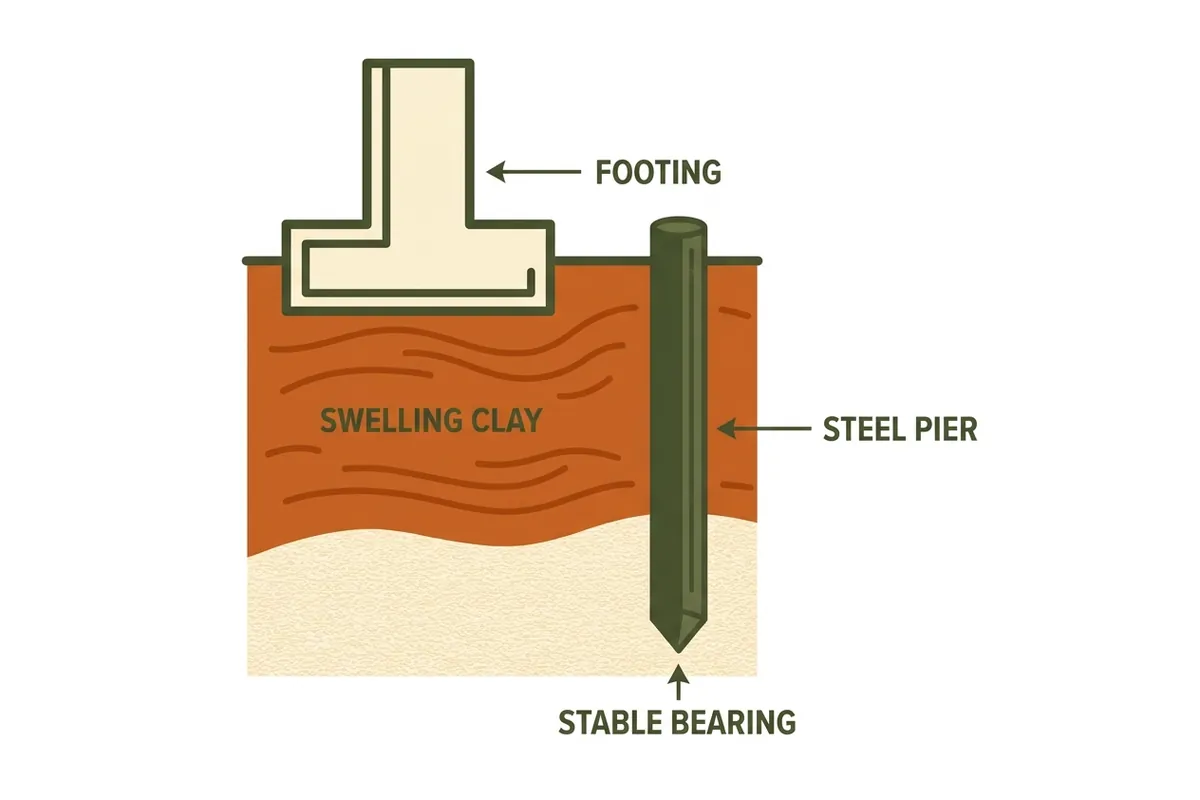
The line is simple and worth stating plainly, because the industry blurs it. Polyurethane lifting is for flatwork — slabs that carry their own weight and traffic. Structural foundations carrying a house get piers designed from an elevation survey and driven to measured capacity. Foam injected under a house is not underpinning; it fills voids without providing engineered load transfer. If a company offers to solve your home’s settlement with foam alone, ask what the design capacity is and who stamped it — and get a second opinion. Prices for both live in the cost guide.
Protecting the lift afterward
Foam does not wash out or dissolve, so the fill itself is durable. What undoes the work is the condition that created the void: a downspout discharging at the slab edge and eroding the base, a utility trench that was never properly compacted, or clay that keeps cycling hard because nothing evens out the moisture. We flag whichever applies while we are on site, and the correction is usually a drainage item measured in hundreds rather than thousands.
Concrete leveling questions, straight answers
What does concrete leveling cost in Tyler?
Most slab lifting runs $500-$2,500 depending on the area and how much material the voids take. A sunken driveway approach or a settled walkway sits at the low end; a large patio or a garage floor with significant voids runs higher. It is consistently a fraction of replacement.
How is it different from replacing the concrete?
Leveling lifts the existing slab by injecting expanding polyurethane through small ports, filling the void underneath and raising the concrete back to grade. It takes hours instead of days, costs far less than replacement, and you can walk on it almost immediately. Replacement only wins when the slab itself is broken up rather than merely settled.
Why did my driveway sink in the first place?
Same clay, same cycle. Wilcox soil shrank in a dry season and left a void; the slab, unlike your house, has no piers and simply followed it down. Poorly compacted fill under an approach or a utility trench that was backfilled loosely accelerates it.
Will it sink again?
It can if the cause is not addressed. Polyurethane fills the void and does not wash out, but if a downspout keeps eroding soil under the slab edge or the clay keeps cycling hard, the same conditions apply. We flag the water source in the same visit - it is usually a five-minute fix that protects the work.
Does this work on my house foundation too?
Polyurethane lifting doesn't work on a house foundation, and be cautious of anyone who says it does. Polyurethane lifting is for flatwork - driveways, patios, walks, porch slabs. Structural foundations get piers designed from an elevation survey. Using foam as a substitute for underpinning on a house is a shortcut with no engineering behind it.
Get a free Tyler foundation evaluation
Tell us what the house is doing — stair-step cracks in the brick, doors that stick every August, sloping floors, separating trim — and we’ll schedule an evaluation with photos and measurements. We reply the same business day.