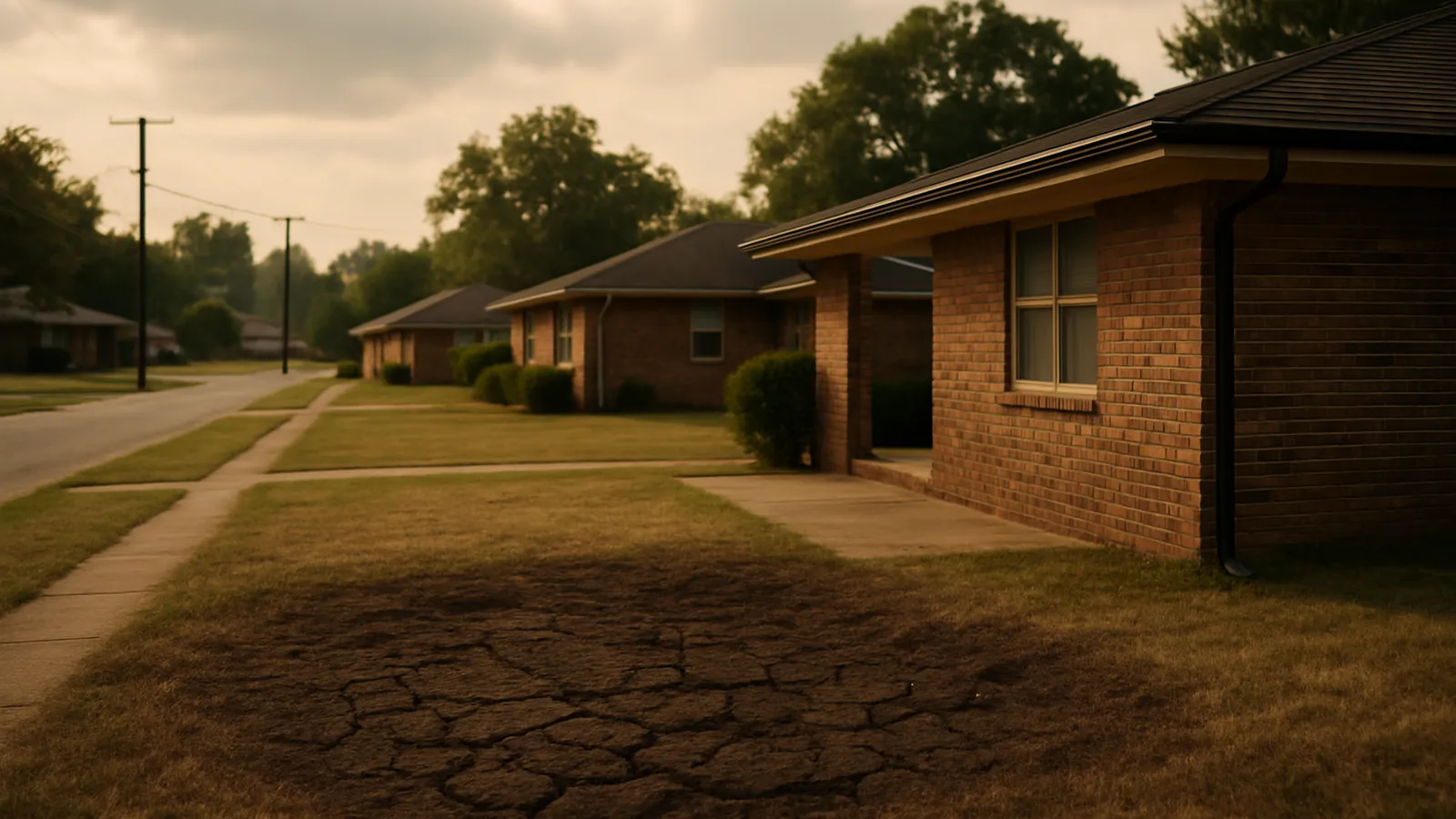
Foundation crack repair in Tyler runs $400–$1,500 for sealing and injection. The price assumes the movement is addressed first — on Wilcox clay, sealing a crack while the soil still cycles produces a neat line that reopens in the next dry season.
How to read a crack, which patterns mean movement, and when sealing is genuinely the whole job.
Reading the crack before sealing it
| Pattern | Usual meaning | What it needs |
|---|---|---|
| Hairline vertical, slab or block | Concrete shrinkage — cosmetic | Seal, monitor |
| Stair-step through brick mortar | Differential settlement | Elevation survey first |
| Horizontal crack in a wall | Lateral soil pressure — the serious one | Structural assessment, promptly |
| Wider than a quarter inch | Meaningful movement, not shrinkage | Survey before any sealing |
| Wider at one end than the other | Rotation — one side dropped | Survey, likely piering |
| Growing month over month | Active, ongoing movement | Do not seal yet — measure |
The measurement anyone can take for free
Before you pay a company to interpret your crack, spend two minutes collecting the data yourself. Photograph it with something for scale — a coin, a tape measure — and note the date. Draw a pencil line straight across the crack and date that too. Then look again in two months, ideally spanning a wet-to-dry transition, which in Tyler means checking in spring and again in late August. If the pencil line has separated, the house is moving and no amount of sealing changes that. If it has not moved through a full East Texas cycle, you very likely have a scar rather than a symptom.
How the repairs actually differ
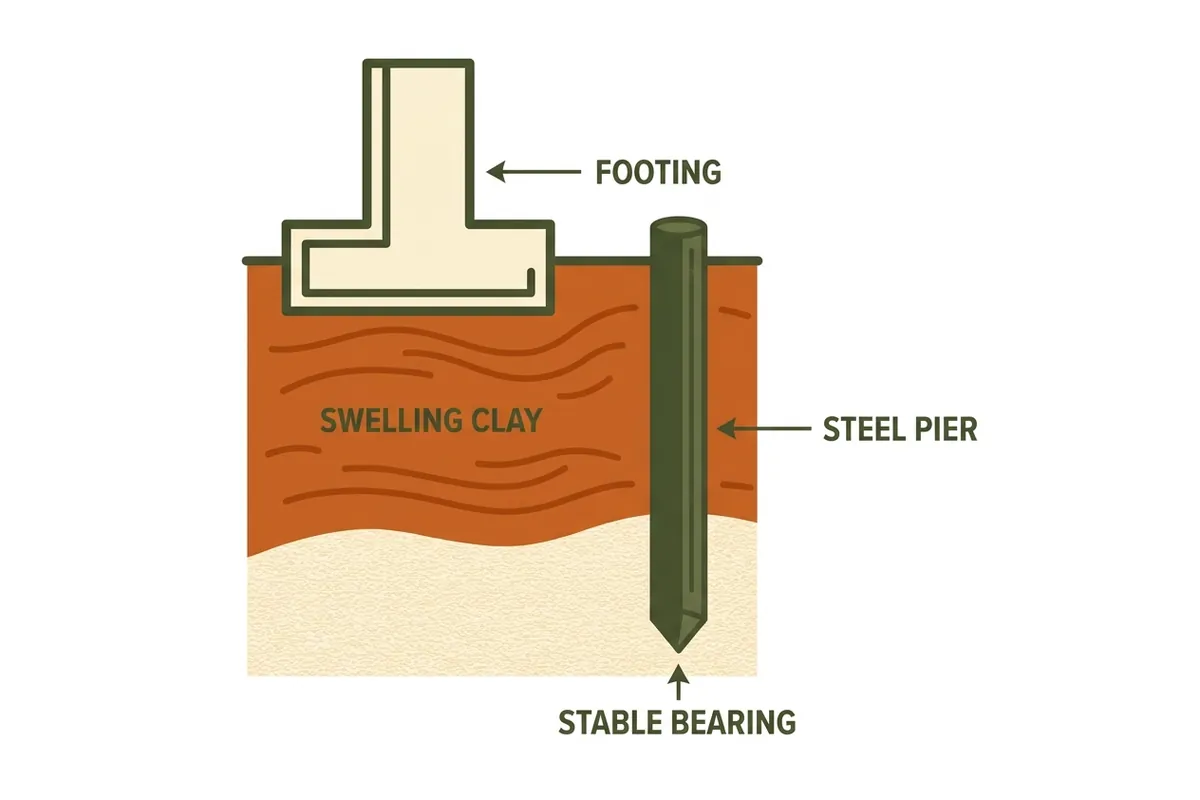
Epoxy injection is structural: it bonds the two faces of a crack in poured concrete back into something that carries load, which is appropriate when the movement is finished. Polyurethane injection stays flexible and is a water-stop rather than a structural fix — the right choice where the crack leaks and may still move slightly. Surface sealing and patching is cosmetic and honest as long as it is called that. Mortar repointing on brick veneer restores appearance after the structure is stable. The wrong choice is not usually the wrong material; it is applying any of them to a foundation nobody surveyed.
When sealing is the entire job
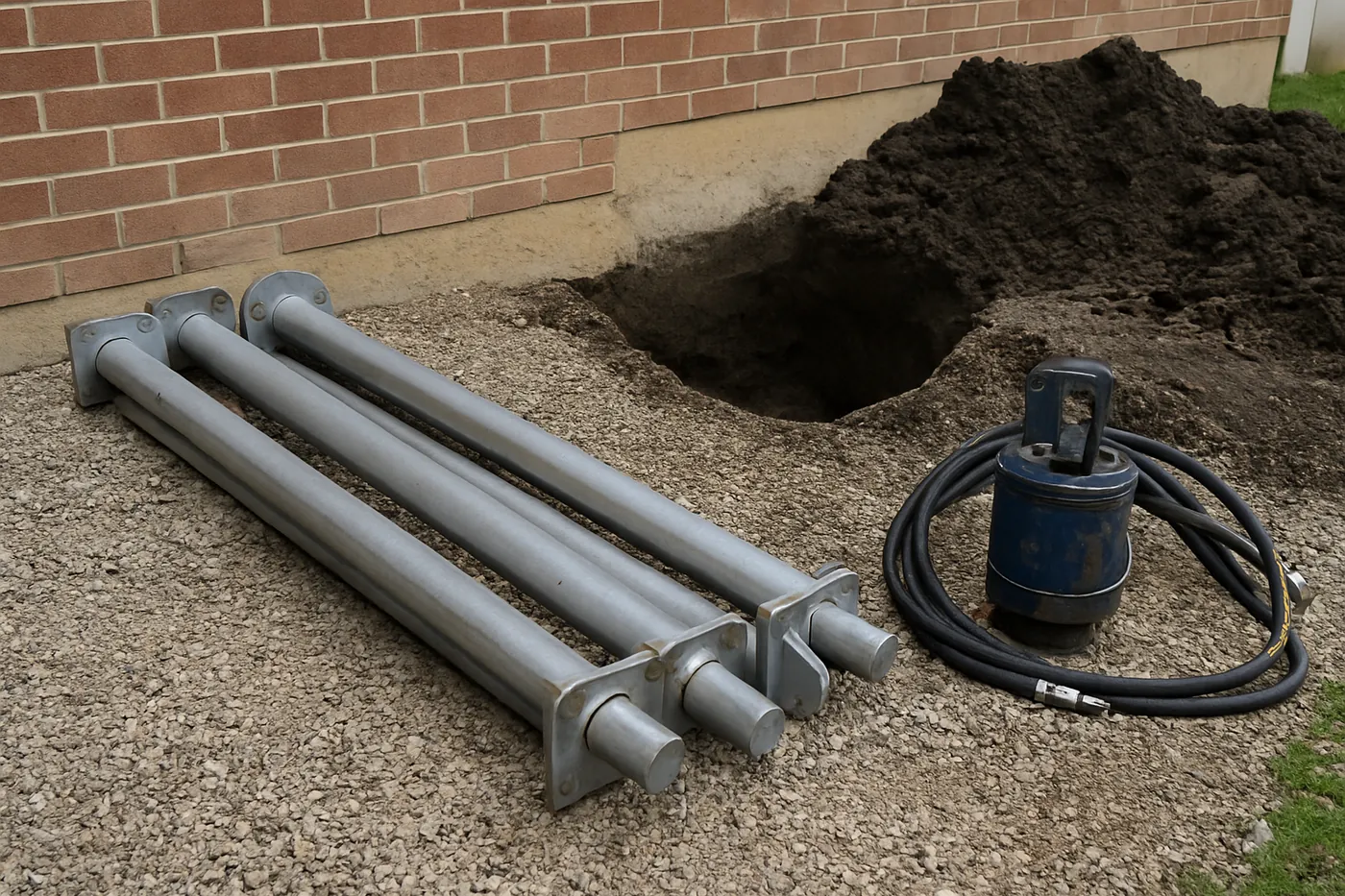
It happens more than the industry admits. A crack that has not changed through a full seasonal cycle, on a house whose elevation survey reads flat, with no drainage problem feeding the soil beside it — that gets sealed, and we say so in writing rather than converting it into a pier quote. If the survey does show movement, the honest sequence is: correct the water, stabilize with piers where the numbers justify it, then repair the cosmetics after a full cycle. Every price is in the cost guide.
Crack questions, straight answers
Which foundation cracks actually matter?
Width, direction, and change matter; length mostly does not. Hairline vertical cracks in a slab or block wall are usually shrinkage and cosmetic. Stair-step cracks through brick mortar, horizontal cracks, and anything wider than a quarter inch or growing month over month indicate movement and deserve an elevation survey before anyone seals anything.
What does crack repair cost in Tyler?
Sealing and injection typically runs $400-$1,500 depending on length and method. That price assumes the movement causing the crack has been addressed - injecting a crack on a foundation that is still moving buys you a neat line that reopens by next August.
Can I just caulk it myself?
For a hairline cosmetic crack in a garage slab, sure. For anything structural, sealing without diagnosis hides the one measurement that tells you whether the house is still moving. Take a photo with a date and draw a pencil line across the crack instead - two months of that data is worth more than a tube of caulk.
Do cracks mean I need piers?
Not necessarily, and we will tell you when they do not. Plenty of Tyler cracks trace to a single drainage problem or one dry season, and correcting the water plus monitoring is the whole answer. Piers are for measured differential movement, and the elevation survey is what separates the two cases.
Will the crack come back after repair?
Only if the movement does. Epoxy and polyurethane injection restore the seal and, with epoxy, some structural continuity - but neither one stops soil from cycling. That is why our crack scopes state plainly whether we believe the underlying movement is resolved, ongoing, or unmeasured.
Get a free Tyler foundation evaluation
Tell us what the house is doing — stair-step cracks in the brick, doors that stick every August, sloping floors, separating trim — and we’ll schedule an evaluation with photos and measurements. We reply the same business day.