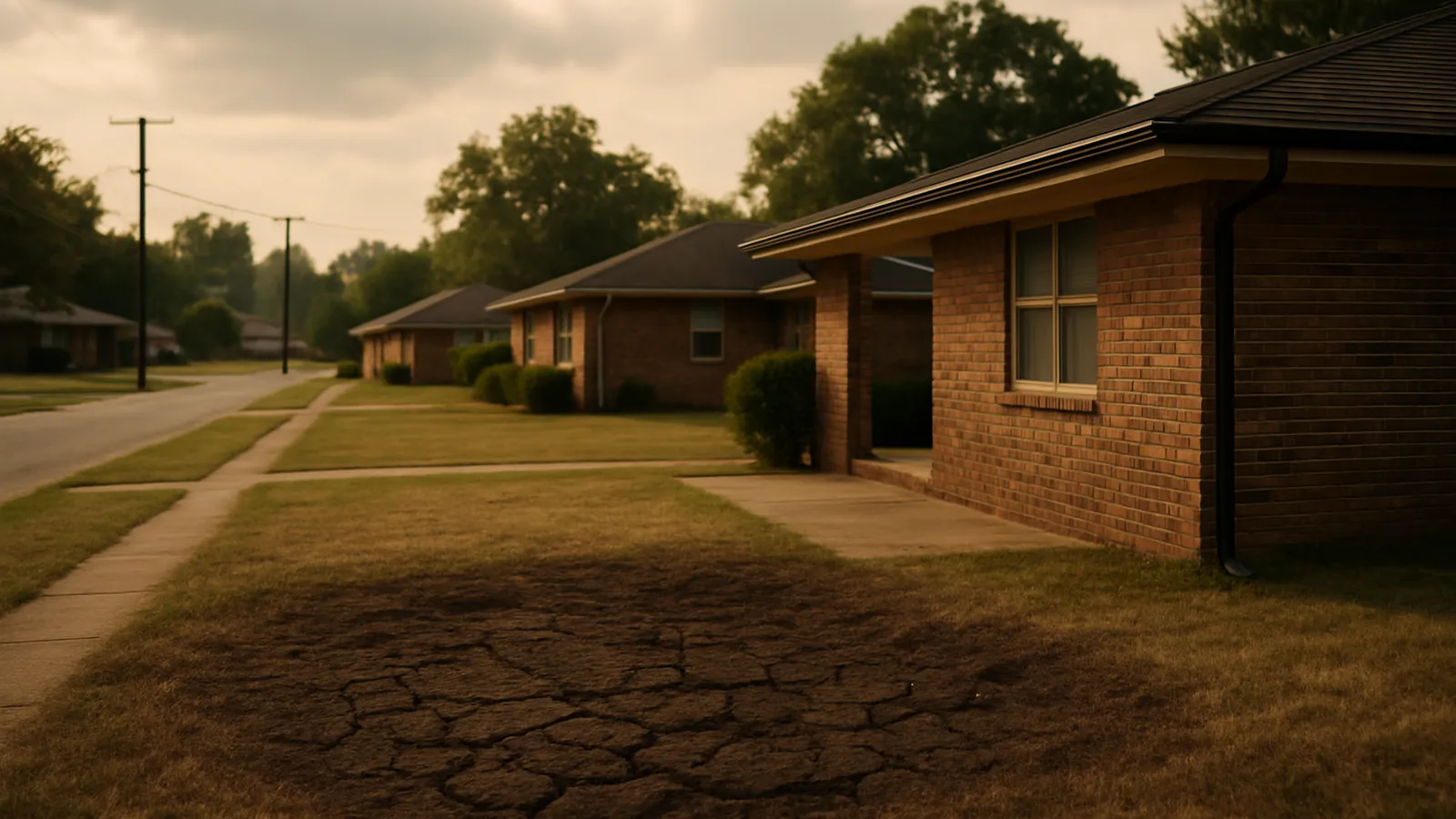
Drainage correction in Tyler runs $1,500–$6,000: grading, extended downspouts, French drains, and area drains that even out moisture around the foundation. On Wilcox clay, uneven moisture is the mechanism — one saturated side and one dry side is what moves a house.
Why moisture evenness beats dryness here, what the work involves, and when it is the entire answer.
Uneven, not wet, is the enemy
It is tempting to think the goal is a dry foundation. On expansive clay the actual goal is a consistent one. Wilcox clay swells when it takes water and shrinks when it loses it, so a house with a downspout flooding the north side and a sun-baked south side has one edge lifting while the other drops. That differential is what cracks brick and racks door frames. Sprinklers running on one side only, a patio that traps water at one corner, a flowerbed watered daily against the wall — all of them create the same imbalance, and all of them are correctable without touching the structure.
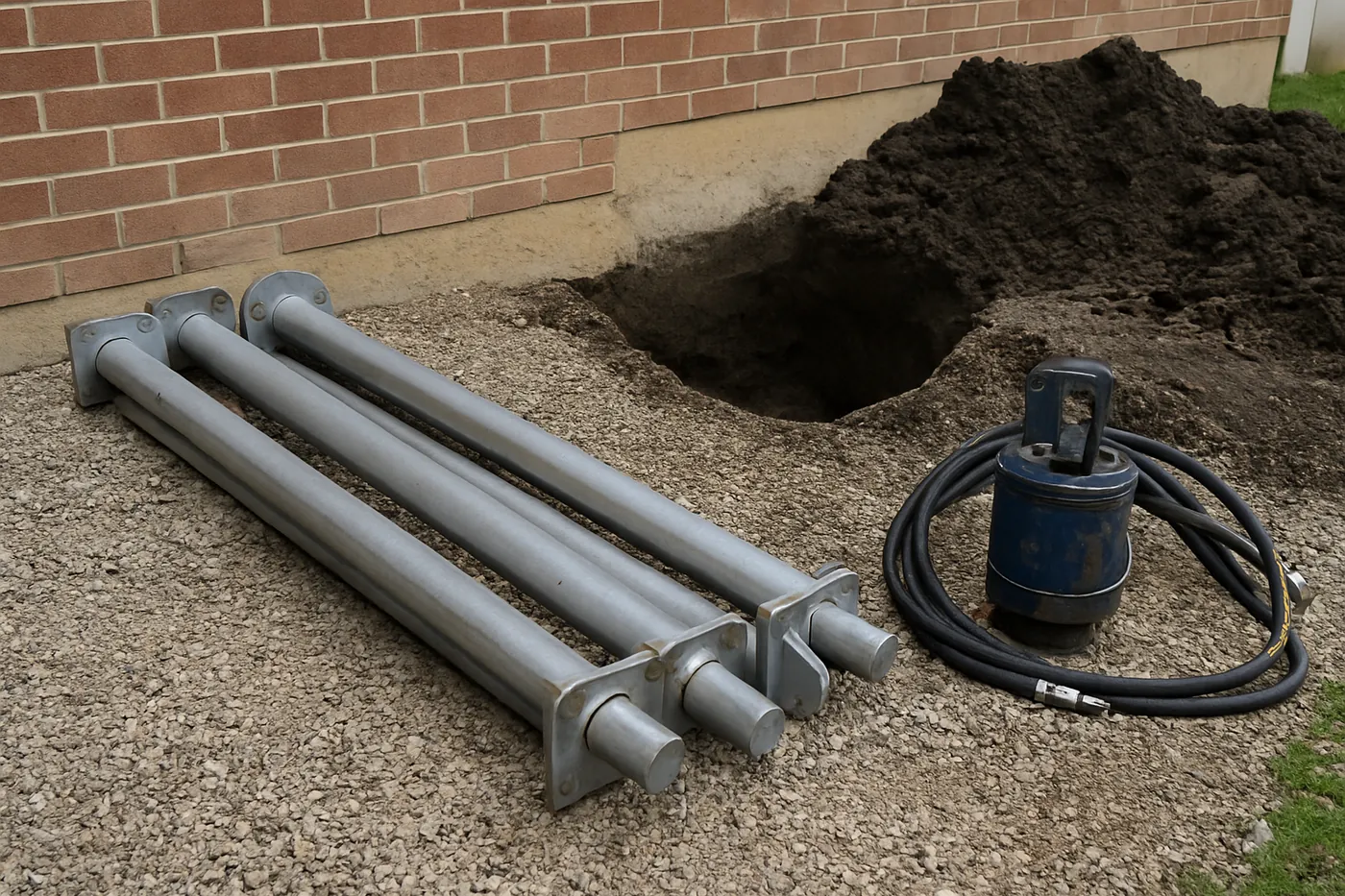
What drainage correction includes
| Item | What it does | Typical cost |
|---|---|---|
| Downspout extensions | Carries roof water well past the clay beside the wall | Low hundreds |
| Grade correction | Restores fall away from the house for the first ten feet | $800–$3,000 |
| French drain | Intercepts and carries subsurface water off the lot | $2,000–$6,000 |
| Area drains | Removes water trapped by patios, walks, and low corners | $1,000–$3,500 |
| Soaker system | Adds moisture evenly through drought — the other direction | Low hundreds |
The drought half of the job
Most contractors talk about removing water. In Tyler the second half matters just as much: putting it back, evenly, in August. When the clay dries it shrinks away from the slab perimeter, and the void that leaves is what the house settles into. Soaker hoses set two to three feet out from the foundation, running modestly on a timer rather than heavily and occasionally, keep the perimeter soil at a stable moisture content through the dry months. It costs almost nothing, it is not a repair, and on this soil it is the maintenance that prevents needing one.
When drainage is the whole foundation repair
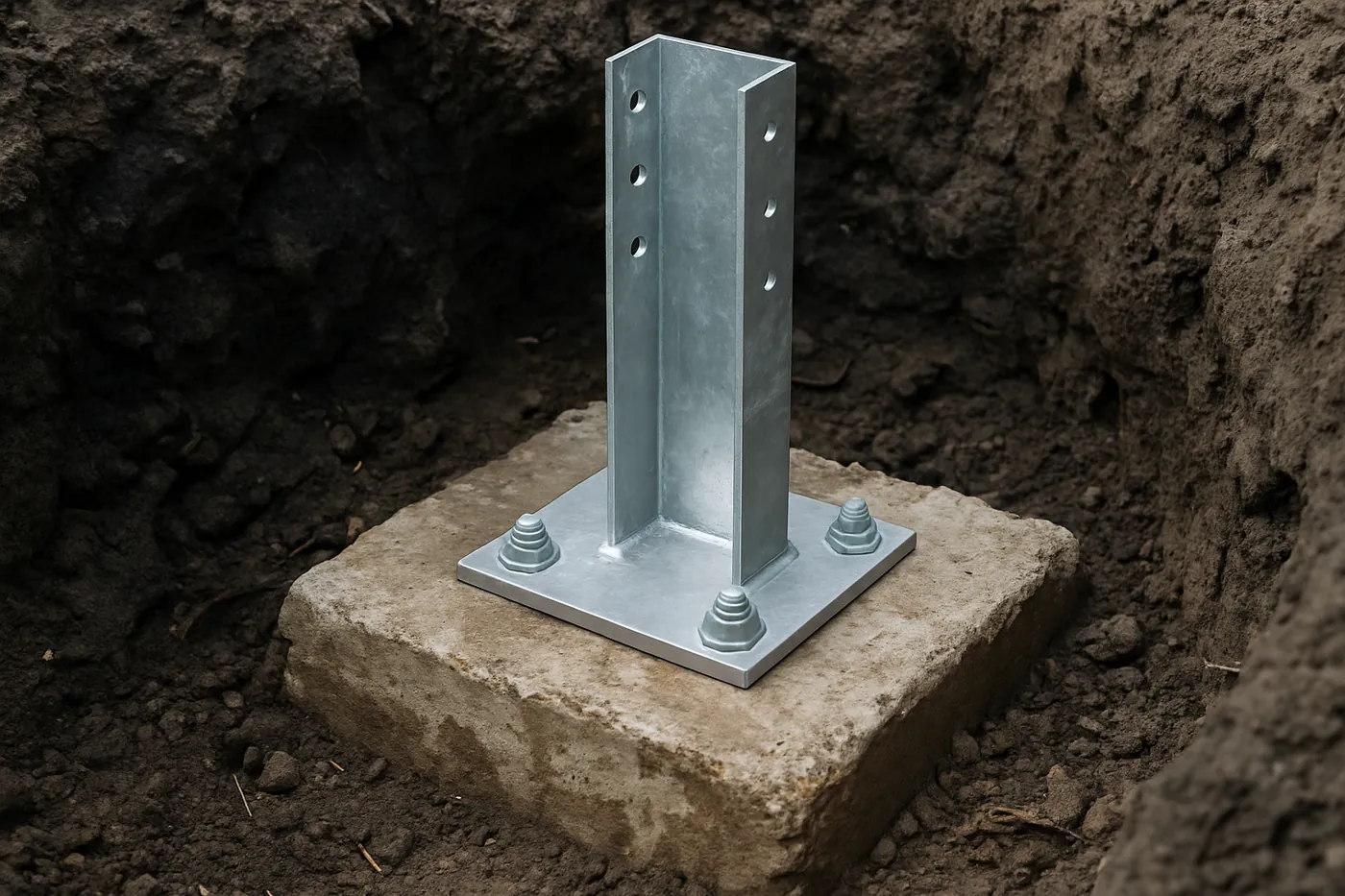
Early movement with a near-flat elevation survey, one clear water problem, and cracks that have not grown through a full cycle — that scope is drainage plus monitoring, and we write it that way. Drainage will not lift a house that has already dropped; that requires piering. But we will not pier a house without correcting the water first, because piers installed under a live water problem stabilize the piered section while the rest keeps moving. Pricing for both sits in the cost guide.
Drainage questions, straight answers
What does drainage correction cost in Tyler?
Most drainage work runs $1,500-$6,000 depending on how much grading is involved, how far water has to be carried, and whether a French drain or area drains are part of it. Downspout extensions and minor regrading sit at the very bottom of that range and frequently do most of the work.
Does drainage really matter on clay that shrinks?
More here than almost anywhere. Expansive clay damages foundations through uneven moisture - one side saturated by a downspout while the other bakes dry. Evening out the moisture around the perimeter is precisely what drainage correction does, which is why it is the cheapest line on most of our scopes and the first one we recommend.
Should I water my foundation in a drought?
You should water your foundation in a drought, and it is the other half of the same idea. Consistent perimeter moisture through an East Texas summer prevents the clay from shrinking away from the slab edge. Soaker hoses two to three feet out from the foundation, on a timer, run modestly and regularly rather than heavily and occasionally.
Will drainage work alone fix my foundation?
Sometimes, when movement is early and the elevation survey is close to flat. It will not lift a house that has already settled - that takes piers. What it reliably does is stop the cycle that caused the settlement, which is why we will not pier a house without correcting the water that fed the problem.
Do I need gutters?
On this soil, functionally yes. A roof concentrates thousands of gallons and delivers it in a line along the drip edge - directly into the clay beside the foundation. Gutters with extended downspouts are the single highest-return, lowest-cost foundation protection available in Tyler.
Get a free Tyler foundation evaluation
Tell us what the house is doing — stair-step cracks in the brick, doors that stick every August, sloping floors, separating trim — and we’ll schedule an evaluation with photos and measurements. We reply the same business day.