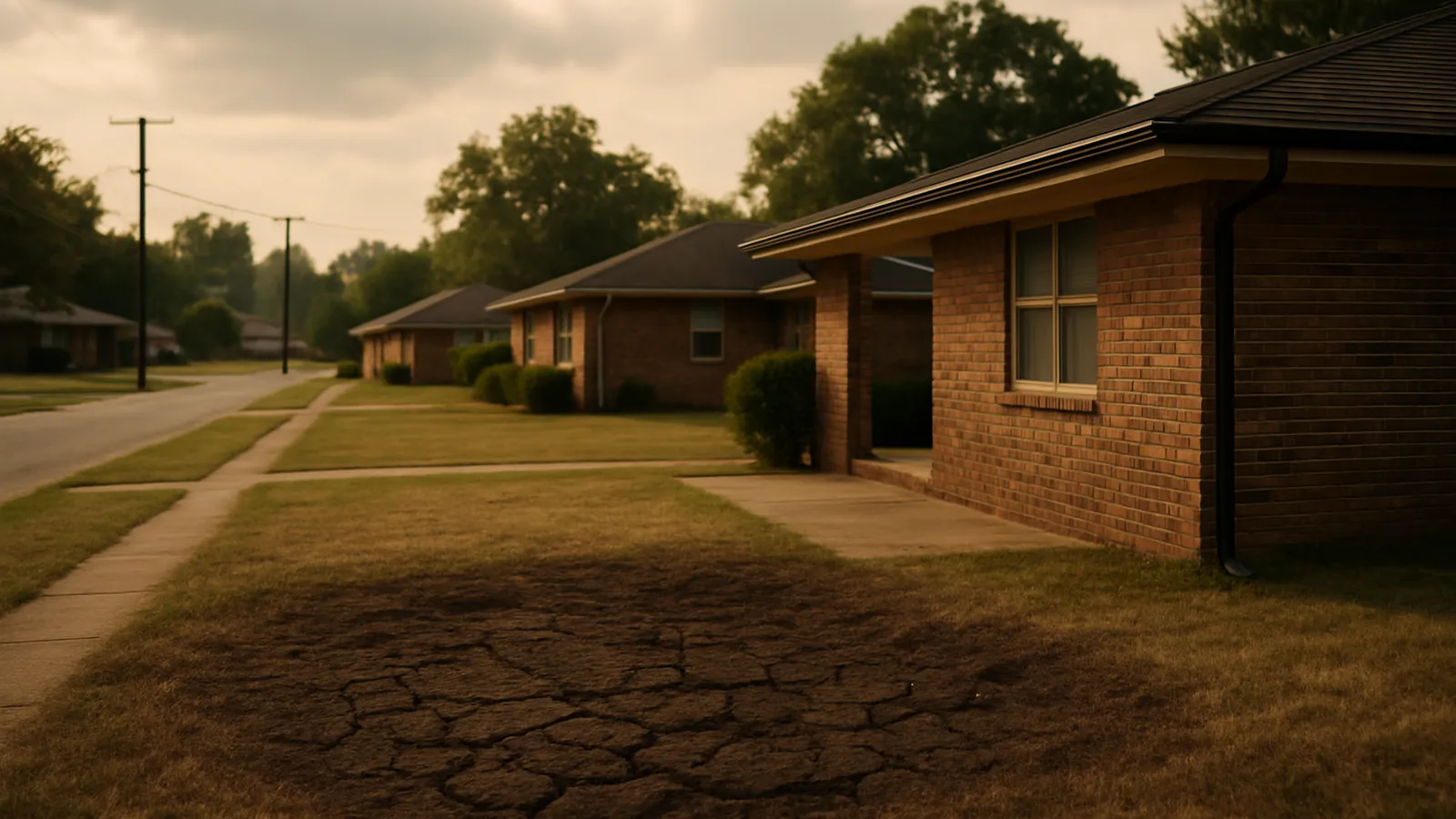
Slab foundation repair in Tyler runs $3,500–$12,000, with full repairs including piering at $4,000–$15,000. Pier count from the elevation survey drives the number. Wilcox clay shrinking away from the slab perimeter in drought is the usual cause.
How slab movement shows itself, why plumbing gets tested first, and what a realistic lift looks like.
Why slabs fail here specifically
A slab is a rigid plate resting on soil, and it performs exactly as well as that soil stays still. East Texas Vertisol clay does not stay still — it takes on water and expands, then gives it up in drought and contracts by as much as a quarter to a third of its volume. When the perimeter clay shrinks in August, it drops away from the slab edge and the concrete spans a void it was never designed to span. Add the fact that the middle of a slab, shaded by the house, dries slower than the exposed edge, and you get differential movement: edges down, center held, and cracking that follows the stress.
What the house tells you first
| Symptom | What it usually means | Urgency |
|---|---|---|
| Doors sticking every August, free in spring | Seasonal clay cycling — the classic Tyler signature | Monitor, correct moisture |
| Stair-step cracks in exterior brick | Differential movement at the perimeter | Get the survey |
| Trim separating at doors and windows | Frame racking as elevation changes | Get the survey |
| Cracks wider than a quarter inch, growing | Active movement, not settled history | Prompt |
| Warm spot on the floor, unexplained water bill | Possible slab leak feeding the clay | Test plumbing first |
Plumbing before piers
This is the step honest companies insist on and rushed ones skip. A leaking line under a slab delivers water into expansive clay continuously, and the resulting swell mimics ordinary soil-cycle movement almost perfectly. Pier a house without finding that leak and the leak keeps working on the unpiered sections. A static plumbing test is inexpensive relative to the repair, and on a Tyler slab showing localized movement it is the first thing worth spending money on.
After the slab work: what to watch
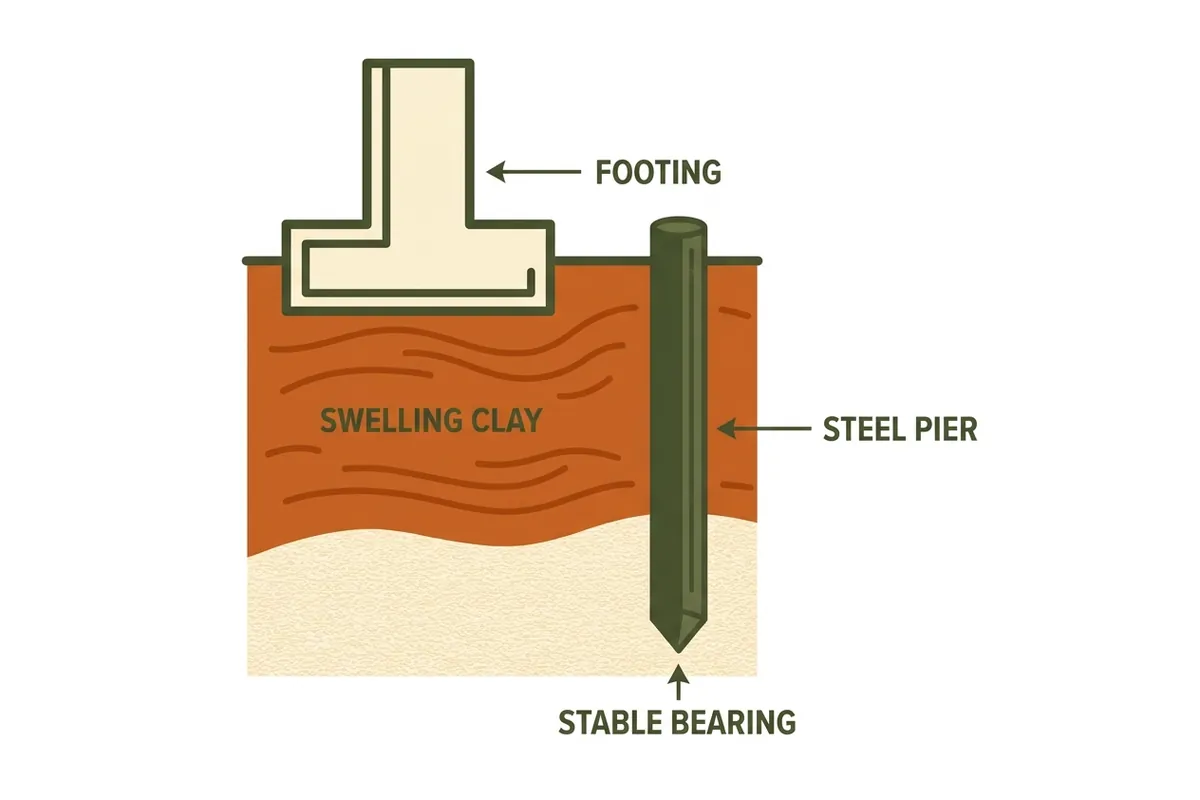
A lifted or stabilized slab is back in tolerance, not rebuilt. Expect finishes to report the change for a few weeks — doors that dragged usually free up quickly, and minor tile or drywall cracking can appear as the slab returns toward level, which is the movement being reversed rather than a new failure. Give it a full wet-and-dry cycle before re-tiling or patching so you do the finish work once. Afterward, protect the assumption underneath: keep water moving away from the slab edge with corrected drainage, keep perimeter moisture steady through drought, and treat any new plumbing leak as urgent. On this clay, a slow leak under a slab is how the whole cycle restarts.
Slab questions, straight answers
What does slab foundation repair cost in Tyler?
Slab work generally runs $3,500-$12,000, and full repairs including piering reach $4,000-$15,000. The variables are how many piers the survey calls for, whether interior piers are needed, and whether plumbing under the slab has to be tested or repaired while access is open.
How do I know if my slab is actually moving?
Doors that stick in one season and swing free in another, stair-step cracks in exterior brick, separation at door and window trim, and floors that feel out of level to a rolling ball are the usual set. Any one of them justifies a free elevation survey; two or more usually means the survey confirms it.
Should the plumbing be tested first?
On a slab home over expansive clay, frequently yes. A leaking supply or sewer line under a slab keeps clay locally saturated and swollen, which produces movement that looks exactly like soil-cycle settlement. Repairing the structure without finding that leak means repairing it again.
Can a slab be lifted all the way back to level?
Rarely all the way, and pushing for it causes damage. The target is stabilization plus as much recovery as the finishes tolerate. A crew promising a perfectly level result on a house that has moved for fifteen years is describing an outcome that cracks tile and drywall on the way there.
Does watering my foundation actually help?
On this clay, yes - as maintenance, not as a repair. Consistent perimeter moisture through an East Texas drought keeps the soil from shrinking away from the slab edge in the first place. Soaker hoses set a few feet out, run on a schedule rather than in bursts, are the cheapest foundation protection available here.
Get a free Tyler foundation evaluation
Tell us what the house is doing — stair-step cracks in the brick, doors that stick every August, sloping floors, separating trim — and we’ll schedule an evaluation with photos and measurements. We reply the same business day.