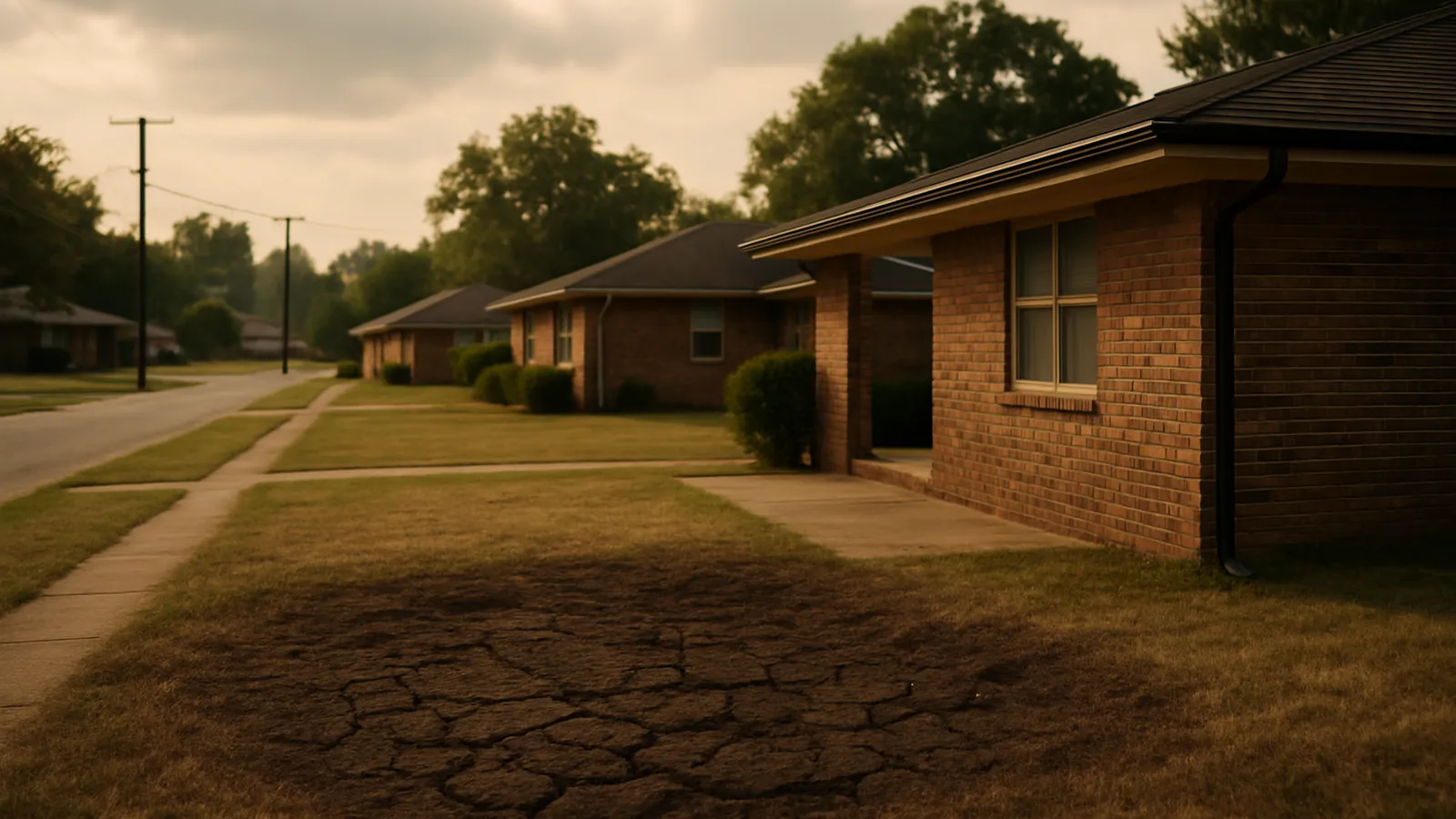
Foundation repair in Tyler runs $4,000–$15,000 for most full repairs, with piers at $1,200–$3,000 each and drainage corrections at $1,500–$6,000. Wilcox clay shrinking 15–30% in drought is the cause. The elevation survey that sets the scope is free.
What this soil actually does, how the repair is decided, and when the honest answer costs a few hundred dollars.
What is under a Tyler house
Smith County sits on the Wilcox Group — the red and orange East Texas clays, interbedded with Taylor Marl, that soil scientists classify as Vertisols. They rank among the highest on the national shrink-swell index, changing roughly 15 to 30 percent in volume between saturated and bone dry. Local contractors name themselves after this dirt; that is how defining it is.
The damage happens on the dry half of the cycle. Wet clay expands and mostly pushes upward and evenly. Drought does something worse: it pulls the clay away from the slab perimeter, leaving a void with nothing under the concrete edge. The slab settles into it. Rain returns, the soil swells back, but the house does not fully rise — and each year the ratchet turns a little further. That is why so many Tyler homeowners first notice cracks in August, and why foundation calls spike after a dry summer.
What we do about it
| What the house is doing | What it usually means | The work | Typical range |
|---|---|---|---|
| Doors stick every August, free in spring | Seasonal clay cycling, often no permanent drop | Drainage and moisture evening | $1,500–$6,000 |
| Stair-step cracks in the brick | Differential movement at the perimeter | Survey, then piering that zone | $4,000–$15,000 |
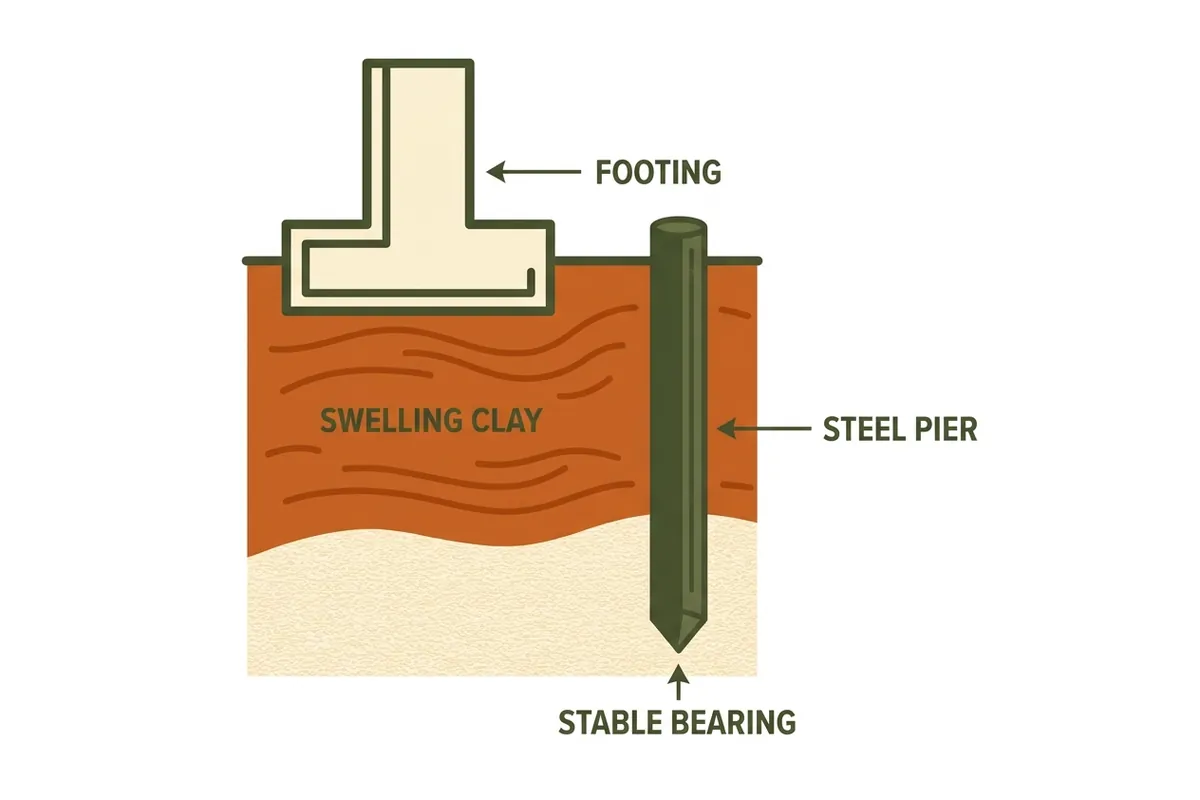
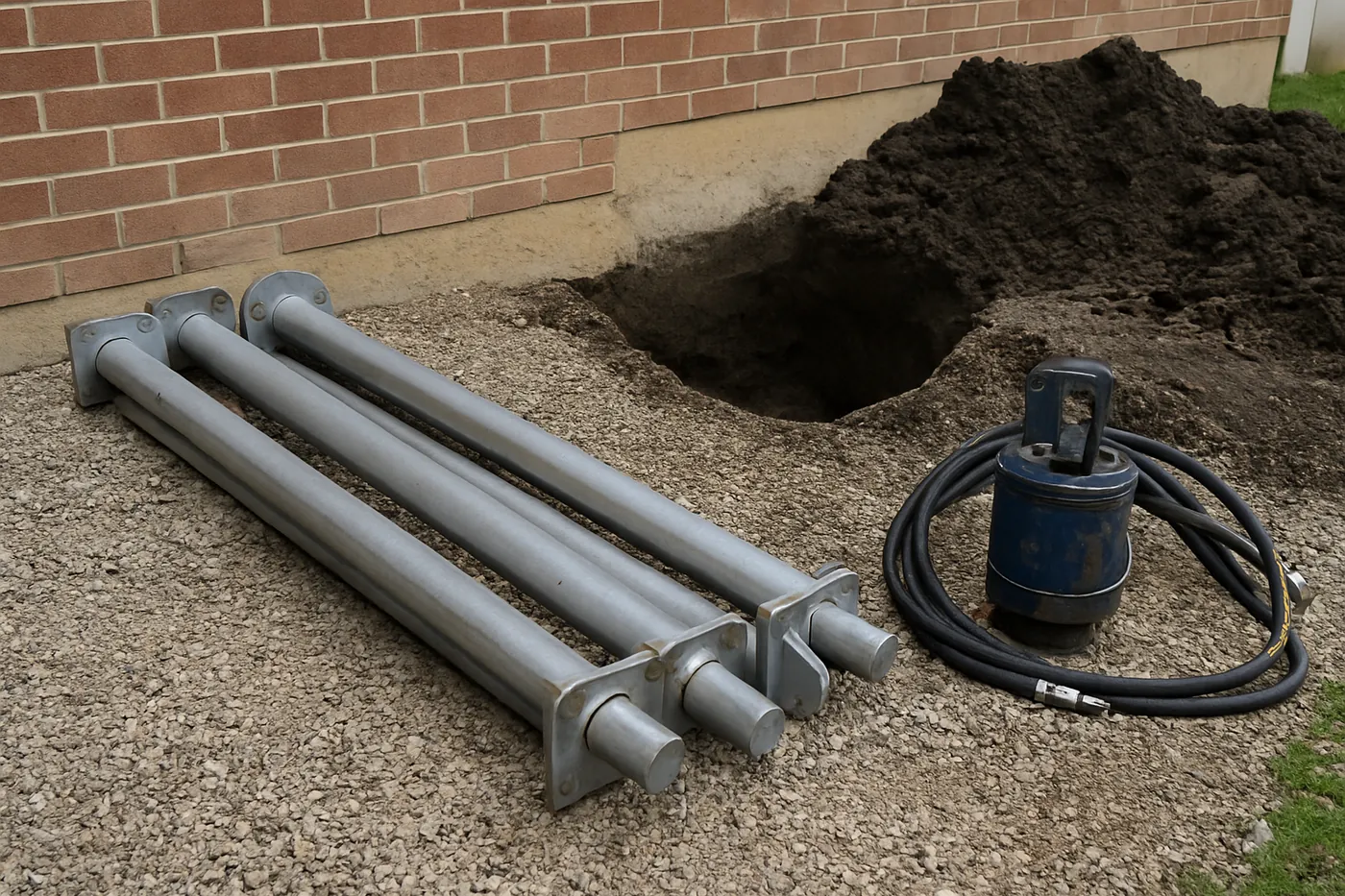
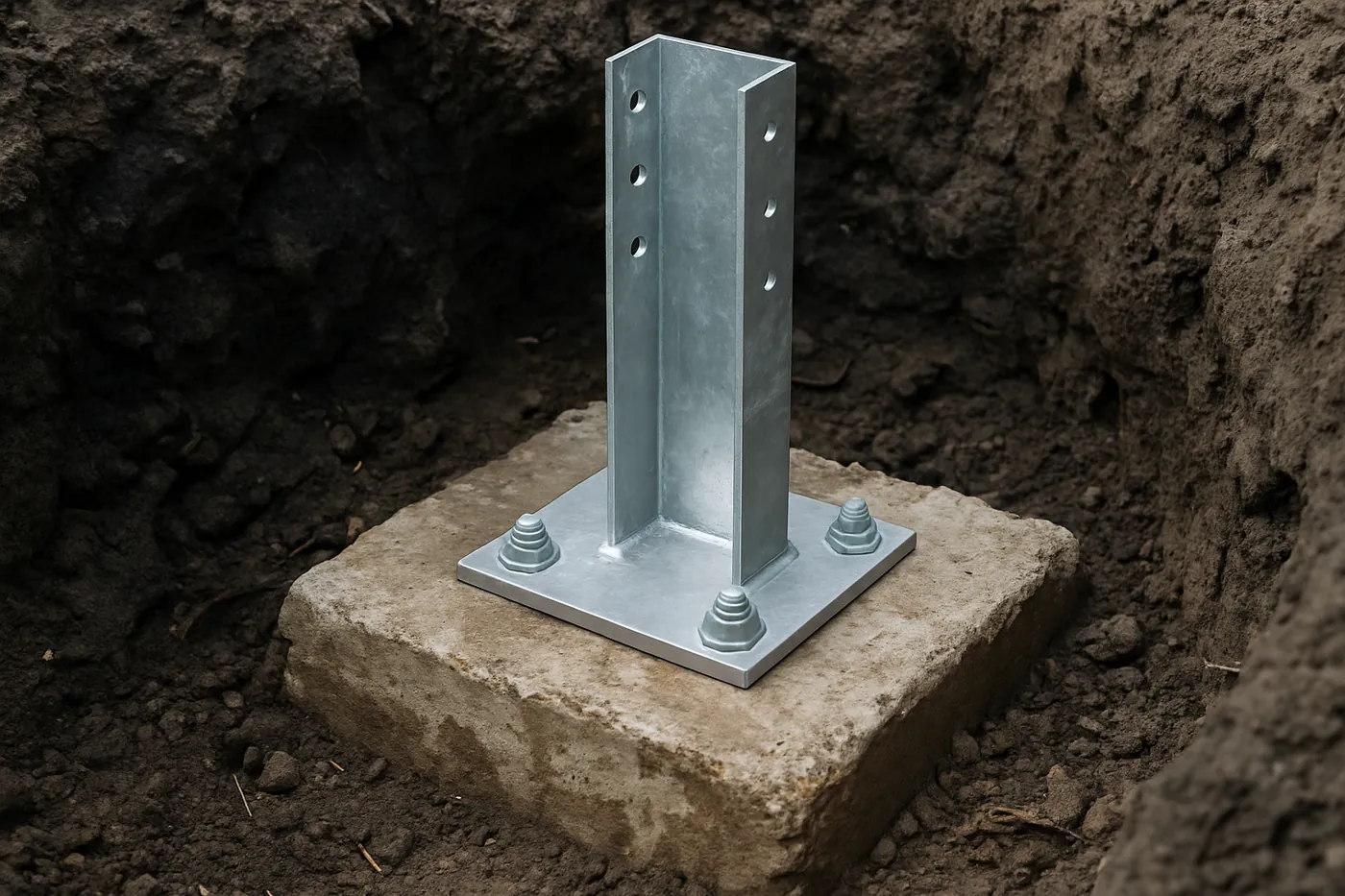
| Sloping floors, separating trim | Established settlement | Piering to stable bearing | $1,200–$3,000/pier |
| Cracks that never change | Old scar, movement long finished | Seal and monitor | $400–$1,500 |
| Sunken driveway or patio | Flatwork followed the clay down | Polyurethane lifting | $500–$2,500 |
| Warm floor spot, high water bill | Possible slab leak feeding the clay | Plumbing test before structure | $3,500–$12,000 |
Every number above, and what moves it, is broken out in the Tyler cost guide — including the jobs where the honest answer is a few hundred dollars of gutter work.
The survey is the whole argument
Every foundation conversation in this town should start with the same document: a floor elevation survey reading height across the slab at a grid of points and reporting the differences in inches. It converts “the house feels off” into data. A house reading within a fraction of an inch across its span is not settling regardless of how alarming the brick looks. A house reading an inch and a half low at one corner has a defined problem, and the pier count follows arithmetic rather than salesmanship. Ours is free, it is written down, and it is yours to hand to every other bidder.
Why we start outside
Because on reactive clay, uneven moisture is the mechanism — not water itself. A downspout flooding the north side while the south side bakes through August produces one edge lifting and one edge dropping, and that differential is what cracks brick and racks door frames. So we walk the water path before we walk the house: where the roof discharges, whether the grade still falls away, whether a sprinkler zone runs against one wall, how close the big trees are. Twenty minutes outside regularly saves a Tyler homeowner five figures inside.
What we won’t recommend
- Piers before a survey. A pier count with no elevation numbers behind it is a price, not a design.
- Foam injection as house underpinning. Polyurethane is for flatwork; structural loads need engineered piers.
- Sealing an active crack. It produces a neat line that reopens in the next dry season.
- Removing a mature tree as a reflex. Taking out a big tree can release the soil to swell for years afterward.
- Piering a house with an untested slab leak. The leak keeps working on everything nobody piered.
Three questions get their own deep pages: what an elevation survey actually proves in settlement repair, how helical and push piers each prove capacity, and what insurance covers when a slab leak — not the clay — moved your house.
Foundation questions Tyler homeowners ask
How much does foundation repair cost in Tyler?
Most full repairs run $4,000 to $15,000, with piers at $1,200 to $3,000 each. Slab work runs $3,500 to $12,000, drainage correction $1,500 to $6,000, and crack repair $400 to $1,500. The elevation survey that decides which one you need is free.
Why do Tyler foundations move so much?
Wilcox Group clay. East Texas red and orange clays are classified as Vertisols and rank among the highest on the national shrink-swell index, changing roughly 15 to 30 percent in volume between wet and dry. Drought pulls that clay away from the slab perimeter and the concrete settles into the void.
Do I actually need piers?
Frequently not, and we will tell you when. A meaningful share of the houses we survey need water managed rather than structure installed - gutters, extended downspouts, ten feet of restored grade. The elevation survey separates real differential movement from cracks that stopped moving years ago.
What does the free evaluation include?
An elevation survey across the slab reported in inches, crack documentation with photographs, a walk of the exterior water path, and a written scope with fixed prices per line if work is warranted. About an hour, and it is yours to take to other bidders.
Will insurance cover it?
Rarely for soil movement, because Texas policies exclude earth movement and expansive clay cycling is exactly that. Often for damage caused by a sudden plumbing discharge under the slab, which is a common cause in this market and worth a static test before you spend.
Should I water my foundation in the summer?
On this clay, yes. Consistent perimeter moisture through an East Texas drought keeps the soil from shrinking away from the slab edge in the first place. Soaker hoses two to three feet out, run modestly on a timer rather than heavily and occasionally, are the cheapest protection available here.
Foundation repair across Smith County
WhitehouseLindaleBullardFlintChapel HillNoondayChandlerTroupArp all service areas
Get a free Tyler foundation evaluation
Tell us what the house is doing — stair-step cracks in the brick, doors that stick every August, sloping floors, separating trim — and we’ll schedule an evaluation with photos and measurements. We reply the same business day.