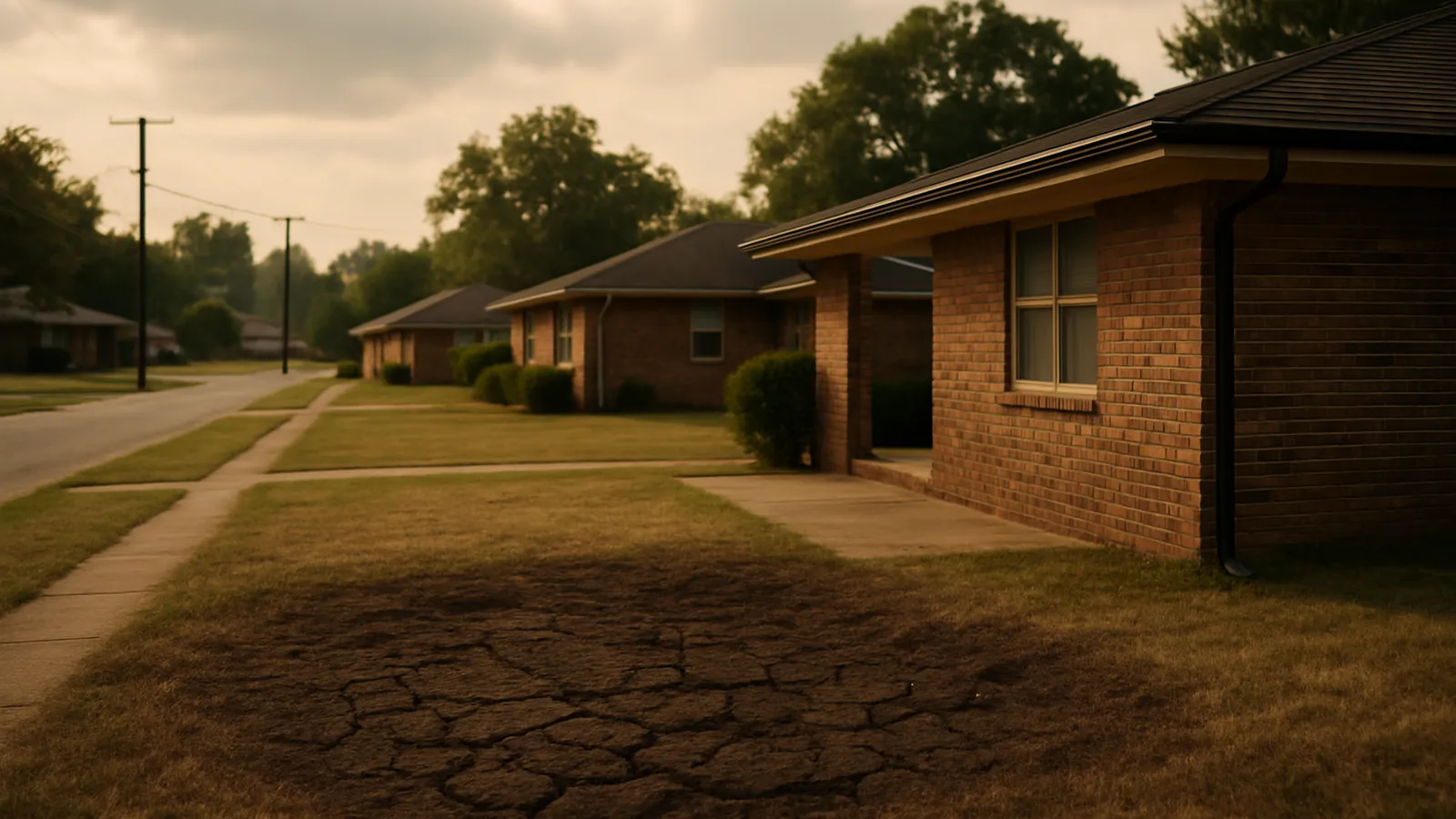
Most Troup foundation repairs land between $4,000 and $15,000; piers run $1,200–$3,000 each. Wilcox clay changing 15–30% in volume between wet and dry is the mechanism, and the free elevation survey is what decides pier count.
Old-town housing on reactive ground
Troup’s core is genuinely old by East Texas standards, with housing that has stood through many decades of wet-dry cycling. Houses that old have usually found an equilibrium with the soil — and the ones that call us are typically the ones where something changed: a tree came down, a drive was poured, a room was added, or drainage was altered next door.
Additions are a common trigger
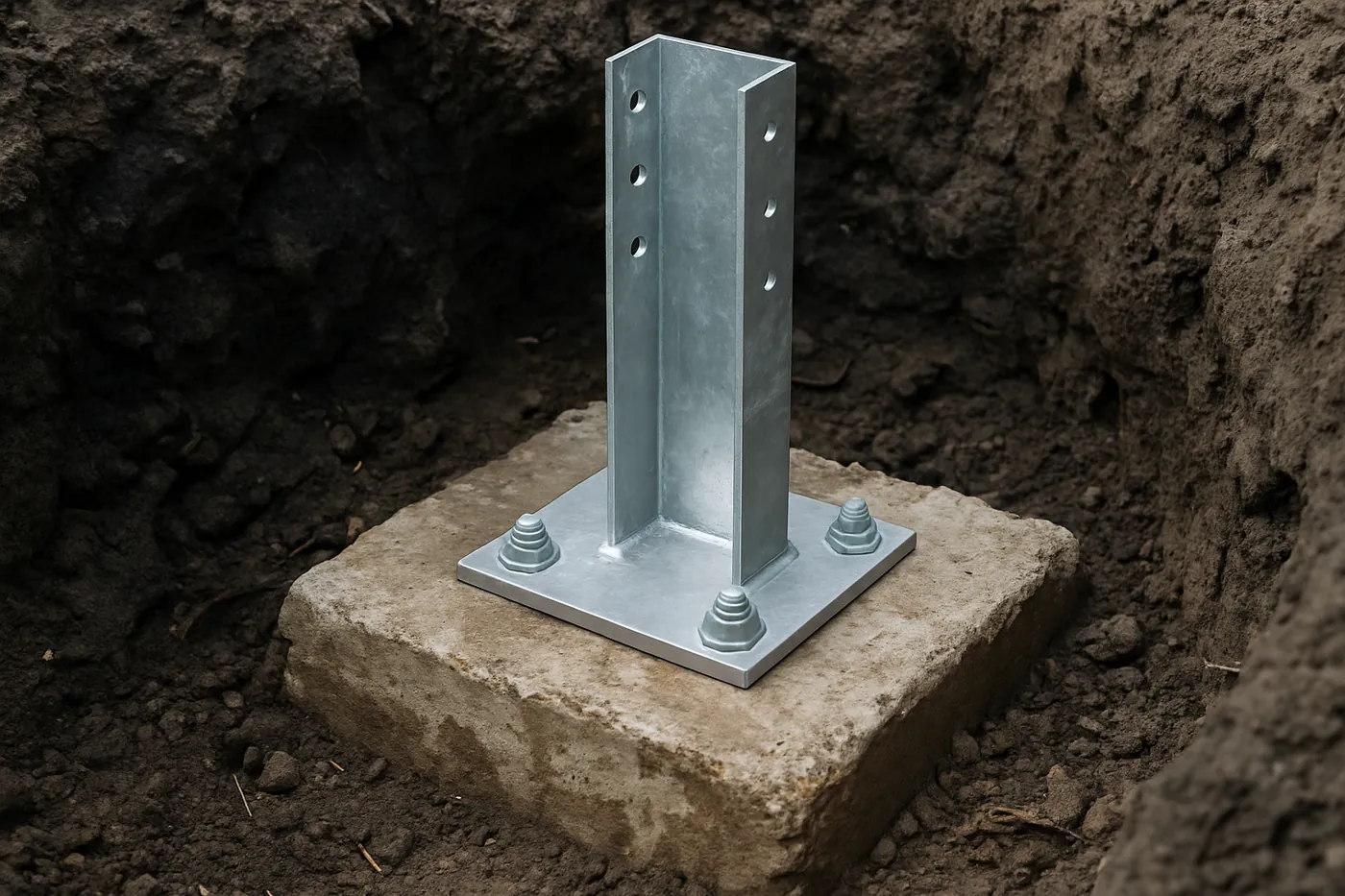
An addition built on a separate, shallower foundation than the original house is one of the most reliable sources of differential movement we find. The two sections respond to the same soil cycle at different rates, and the joint between them takes the difference. That is a case where helical piers under the lighter addition often make more sense than push piers, because the addition may not weigh enough to drive one.
What the survey usually shows
Long-settled houses frequently read as gently out of level everywhere rather than sharply low in one place, and that distinction matters: broad, old, stable settlement is often something to document and monitor rather than pier. We will tell you when that is what the numbers say.
Asked in Troup
The house is nearly a century old and has always had cracks. Should I worry?
Not necessarily. Long-settled houses often read as gently out of level everywhere rather than sharply low in one spot, and broad old stable settlement is frequently something to document and monitor rather than repair. The survey tells us which situation you are in.
We added a room and now there's a crack at the joint. Why?
Because the addition sits on a separate, usually shallower foundation than the original house, so the two respond to the same soil cycle at different rates. The joint takes the difference. Helical piers under the lighter addition are frequently the right answer since it may not weigh enough to drive a push pier.
Is monitoring actually useful, or is it a stall?
It is data, and it is free. A dated photo plus a pencil line across each crack, checked across a wet-to-dry transition, tells you whether the house is moving now or moved decades ago. We would rather you had that information than buy piers on a guess.
What happens after you call from Troup
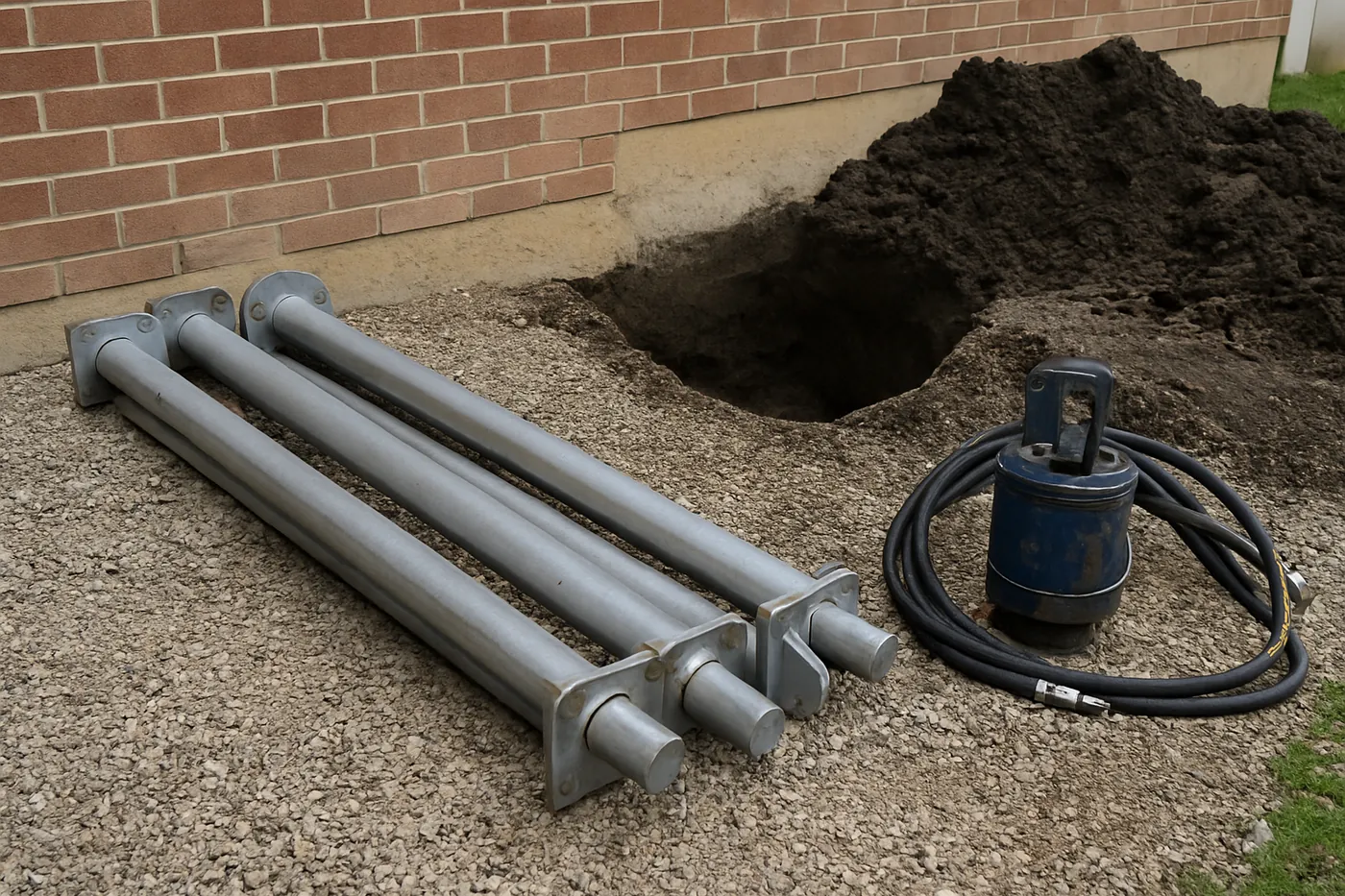
We ask what the house is doing and when it started, then schedule. The survey produces numbers rather than opinions, and the numbers decide whether you need piers, drainage, or monitoring. Everything is in writing before any work begins.
Get a free Tyler foundation evaluation
Tell us what the house is doing — stair-step cracks in the brick, doors that stick every August, sloping floors, separating trim — and we’ll schedule an evaluation with photos and measurements. We reply the same business day.