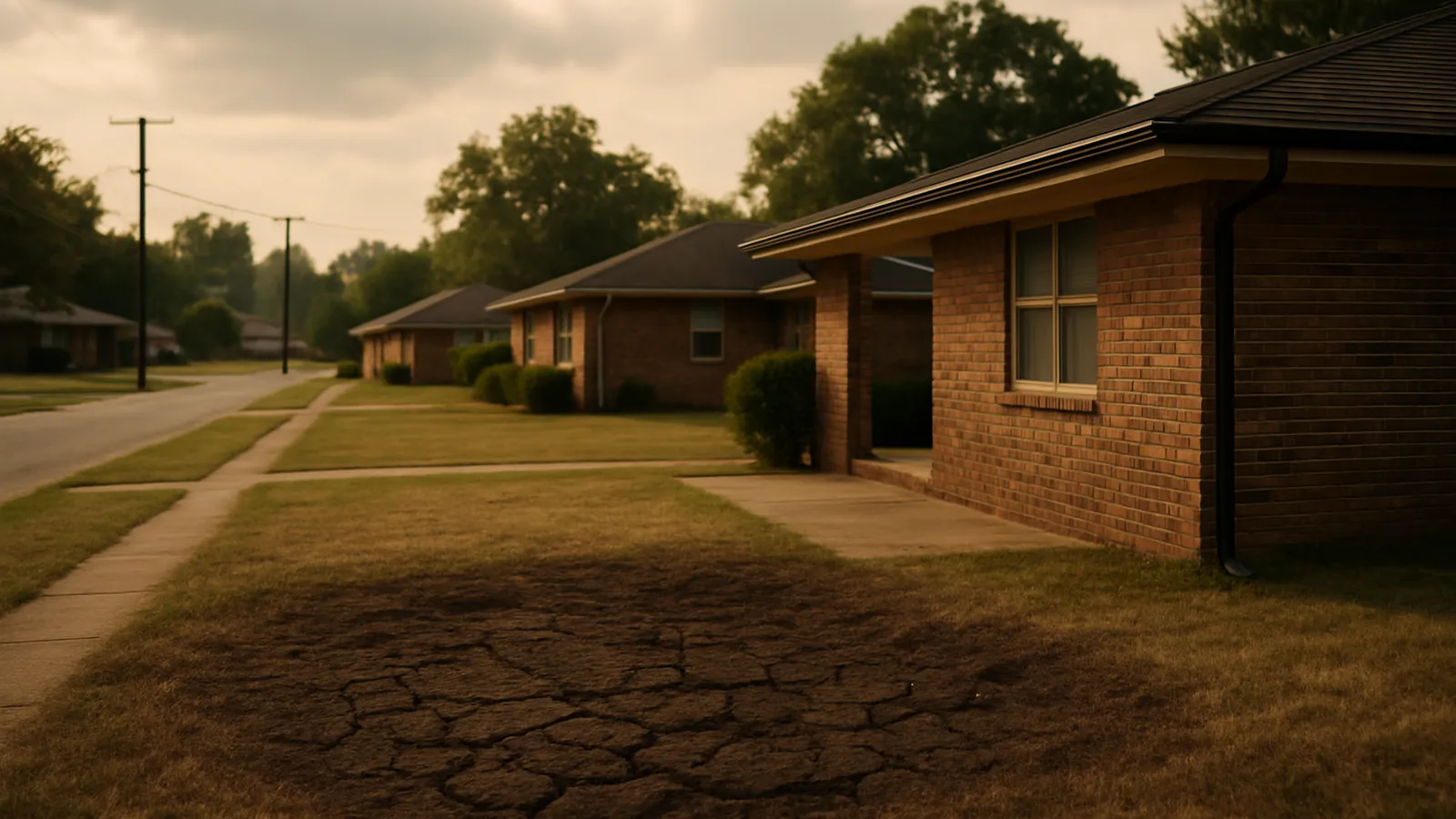
Foundation settlement repair in Tyler runs $4,000–$15,000, with piers at $1,200–$3,000 each. Pier count comes from an elevation survey, not from crack photos. Wilcox clay shrinking 15–30% in an East Texas drought is what creates the void a slab settles into.
How settlement is actually measured, why the dry season does the damage, and what the repair sequence looks like.
The measurement that settles the argument
Every foundation conversation in this town should start with the same document: a floor elevation survey. It reads height across the slab at a grid of points and reports the differences in inches, which converts a subjective impression — the house feels off, the doors stick — into data. A house that reads within a fraction of an inch across its span is not settling regardless of how dramatic the brick cracks look. A house that reads an inch and a half low at one corner has a defined problem with a defined scope, and the pier count follows arithmetic rather than salesmanship.
Why August is when Tyler houses drop
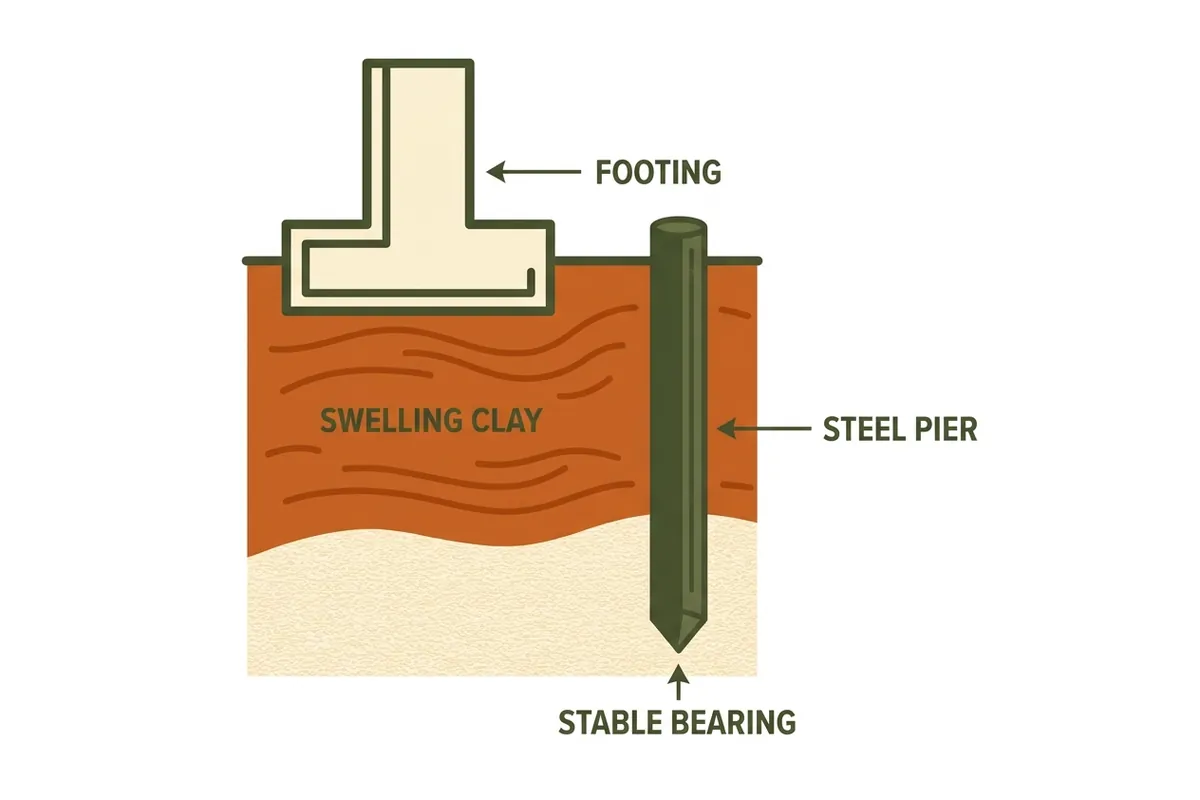
The wet half of the cycle mostly lifts and pushes. The dry half is what damages. When Wilcox clay loses moisture it contracts by as much as a quarter to a third of its volume and physically withdraws from the slab perimeter, leaving an unsupported edge. The concrete does the only thing it can do and follows. Then the rains return, the clay swells, and the soil pushes back up — but the house does not fully return, because it settled into a position while the support was gone. Each year the ratchet turns a little further, which is why settlement in East Texas is measured in seasons rather than events.
What the survey numbers usually mean
| Differential reading | Typical interpretation | Usual response |
|---|---|---|
| Under 1/2 inch across the span | Within normal construction tolerance | Correct water, monitor |
| 1/2 to 1 inch, one area | Real but early movement | Drainage first, re-survey |
| 1 to 2 inches, defined zone | Established settlement | Piering that zone |
| Over 2 inches or accelerating | Advanced — finishes at risk | Prompt piering, possibly engineer |
| Localized dip with a wet spot | Suspect plumbing, not soil cycle | Static test before any repair |
The first year after the repair
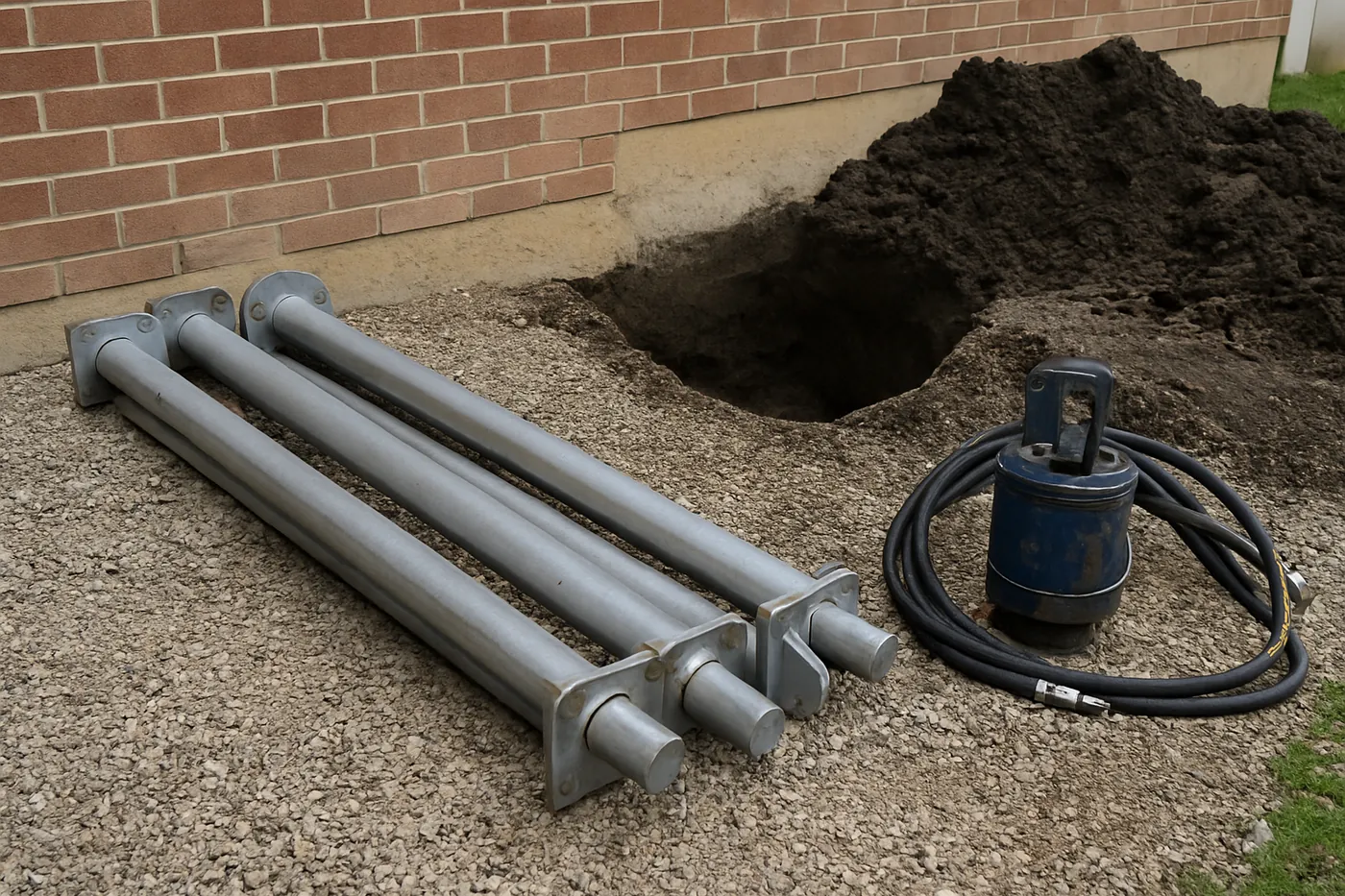
Piers stop the movement; they do not erase its history. Give the house one full East Texas cycle — a wet spring and a dry August — before chasing cosmetics, and you patch drywall and re-point brick once instead of twice. Hairline cracks can breathe through that swing, which is normal and not a failure of the work. Monitoring costs nothing: a dated photo and a pencil line across each crack answers whether anything moved in ten seconds.
Then keep the perimeter moisture steady through the drought months and the gutters discharging well away from the slab, because the sections nobody piered are still sitting on the same reactive clay. Keep the pier log with your closing documents too — the next buyer’s inspector will find the brackets regardless, and the difference between a red flag and a selling point is whether you can hand over the paperwork.
Settlement questions, straight answers
How do I know it's settlement and not just cracks?
Numbers. An elevation survey reads floor height across the whole slab and reports the difference in inches; settlement shows up as a measured drop in one area relative to the rest. Cracks are evidence, but they are ambiguous evidence - the survey is what turns 'the house looks off' into a diagnosis.
What does foundation settlement repair cost in Tyler?
Most full repairs run $4,000-$15,000, with piers at $1,200-$3,000 each. The pier count comes from how much of the perimeter has dropped and how far, which is exactly what the free elevation survey establishes before anyone quotes.
Why does settlement happen here more than other places?
Because Wilcox Group clay changes volume 15-30% between wet and dry, and East Texas reliably delivers both extremes in a single year. Drought pulls the clay away from the slab perimeter; the concrete settles into the void; the next wet season swells the soil back but the house does not rise with it. Repeat annually and the drop accumulates.
Can settlement reverse on its own?
Partially, and it fools people. A wet spring can lift a house enough that cracks visibly narrow, which is why homeowners talk themselves out of calling. What is actually happening is the cycle continuing - and each dry season tends to take a little more than the wet one gave back.
Should I get an engineer?
For a contested diagnosis, a purchase, or bids that disagree, yes - an independent structural engineer costs a fraction of the repair and has no stake in the scope. Ask for an elevation survey in numbers, a stated cause, a specific remedy with pier depth or capacity, and a stamp. A letter that just describes your cracks is a document, not an opinion.
Get a free Tyler foundation evaluation
Tell us what the house is doing — stair-step cracks in the brick, doors that stick every August, sloping floors, separating trim — and we’ll schedule an evaluation with photos and measurements. We reply the same business day.